
VentureBeat names Rob Strechay as its first Lead Analyst, expanding its enterprise AI research push
GetDeal Team
Contributor
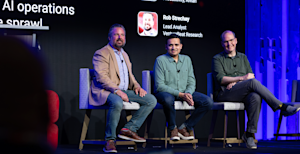
Rob Strechay, until recently managing director and principal analyst at theCUBE Research, has joined VentureBeat as our first Lead Analyst and a founding analyst of VentureBeat Research. His arrival is the next step in a deliberate move at VentureBeat toward deeper specialization: analysis built for the technical decision-makers — the directors, VPs, CIOs, and CTOs — who are evaluating, buying, and deploying enterprise AI. The enterprise AI stack is being rewritten in real time, and the decision-makers I talk with are starved for objective, defendable data. Rob Strechay has the mix of technical rigor and operating experience needed to dissect the architecture behind the next phase of enterprise AI deployment. The questions enterprise technology leaders are asking have changed. As organizations move past experimentation with generative AI toward production deployment, they want to know how to orchestrate multi-vendor environments, where the security gaps in their agentic pipelines sit, and how to fix the utilization problems draining their infrastructure budgets. Answering those questions requires more depth than news coverage alone provides, and that is the gap this research offering is built to fill. An analyst who has sat on every side of the table Strechay brings nearly three decades of experience as a practitioner, product executive, and industry analyst. Before becoming an analyst, he was an executive at numerous startups, including Zerto; he joined Amazon Web Services to help build a new analytics service; and he held executive roles across enterprise infrastructure. He later served as a senior analyst at Enterprise Strategy Group and most recently as managing director and principal analyst at theCUBE Research and SiliconANGLE, where he hosted executive interviews and analyzed the evolution of cloud, data, and AI infrastructure. Strechay will initially focus his coverage on cloud infrastructure, advanced data infrastructure, platform engineering and DevOps orc
Related Articles

Anthropic launches free AI security scans for open-source projects
Anthropic's offering to help open-source projects track down security vulnerabilities with a new service called OSS Scanner. It says open-source projects that opt-in will get "thorough, periodic security scans by our strongest models at no cost." That could mean open-source projects get alerted about possible security issues sooner, but the trade-off is that OSS Scanner's reports don't come with human review: The outputs of this opt-in vulnerability scanner will be fully model-generated, without human review or triage. This will enable faster and more frequent scanning, but means that it is possible reports will be incorrect or invalid. Th … Read the full story at The Verge.

Popular AI leaderboard Arena nearly doubles valuation to $3.1B valuation in 10 months
The company behind the popular LMArena leaderboard has raised $200 million led by Lightspeed and Khosla, and is now measuring AI models on alignment issues such as lying.

OpenAI’s revenue is reportedly $20 billion less than previously projected
It had previously been reported that the AI lab's annualized revenue was some $70 billion, but a new report claims it's a whole lot less than that.